
I began the Fish Test by looking for people interested in affiliate marketing, making money online and starting an online business.
X seemed a useful place to start. People publish frequently, conversations happen in public, and I could investigate without spending money on advertising.
But simply finding thousands of posts about affiliate marketing would prove very little.
I needed to answer a more important question:
Were beginners and potential customers actually discussing their problems, or was I mainly finding people trying to sell something to one another?
My initial searches produced plenty of activity.
There were people promoting products, courses, systems and business opportunities. There were affiliate marketers promoting offers and other marketers explaining how to make money online.
In other words, finding people trying to attract customers was easy.
Finding the potential customers themselves was much harder.
I was looking for people saying things such as:
How do I get started?
Why am I not making any sales?
How do I find customers?
How can I get traffic without spending a fortune?
Those conversations were much less obvious in my initial searches.
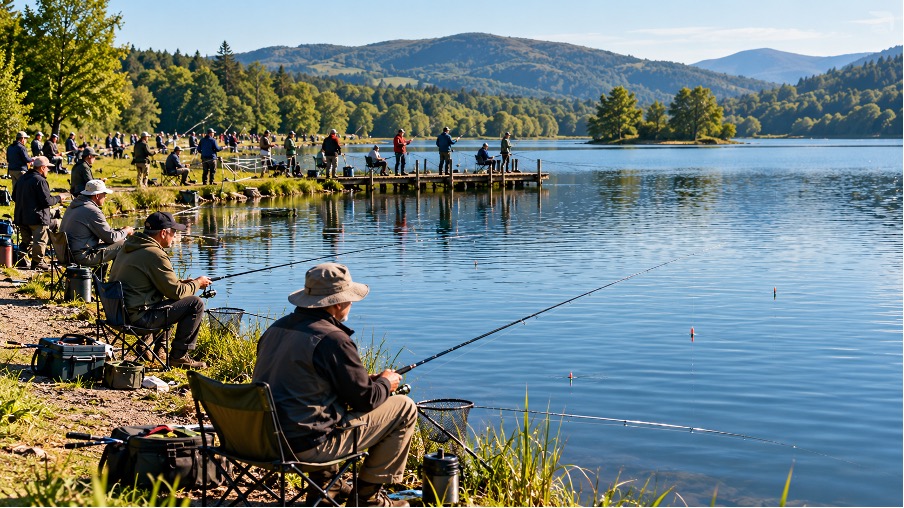
This became what I started calling the fisherman problem.
Imagine arriving at a lake and seeing dozens of people standing around it with fishing rods.
There is certainly plenty of fishing activity.
But the presence of fishermen doesn't prove there are plenty of fish.
The same problem applies online. A platform can contain thousands of people promoting ways to make money without necessarily making it easy to identify the people who actually want help.
Rather than simply observing X from the outside, I created an Ian Ashbrook presence there and began using it as part of the experiment.
I wasn't interested in arriving with an affiliate link and immediately trying to sell something. I wanted to see whether useful observations about starting and building an online business could create conversations and eventually attract the sort of people I was trying to find.
So far, the response has been limited.
That isn't a criticism of X. It is simply the result of this first test. Recording disappointing results is just as important to this experiment as recording successful ones.
The first X investigation taught me something important about the Fish Test.
Activity is not the same as evidence of demand.
Searching for a subject such as affiliate marketing can reveal the people producing and promoting information about it rather than the people experiencing the problems we might be able to solve.
That doesn't mean those people aren't on X.
It means that broad searches may not be the best way to find them.
And that distinction matters. If I spent months creating content simply because millions of people use X, I would still have no evidence that the particular people I want to reach would ever see it.
X therefore hasn't failed the Fish Test.
But neither has it yet given me convincing evidence that it should become my main source of free traffic.
I need to investigate more carefully: look at conversations rather than simply search results, experiment with different questions and subjects, contribute where I genuinely have something useful to say and then measure what happens.
For now, X has given me one of the most useful observations in this experiment:
Sometimes the fishermen are easier to find than the fish.
The experiment continues.

About The Author
Ian Ashbrook is testing whether an ordinary person can still build a genuine online business in 2026 using free traffic. He documents what he tries, what works, what doesn't, and what he learns along the way.
© 2026 Ian Ashbrook. All Rights Reserved.
